The #1 AI SEO Tool to Get Ranked in AI Search Engines
Optimize Ranking in AI Search
Across 
Start using Rankflo AI SEO tool to get ranked, get cited, and scale AI-driven traffic before your competitors do.
Empowering Leading Brands
Driven by Advanced AI SEO Optimization of Rankflo AI


.png%3F2026-02-10T12%253A58%253A43.374Z&w=3840&q=75)

Competitor AI SEO Benchmarking
Use our AI SEO tool to analyze competitor visibility across AI search engines and uncover ranking gaps affecting your AI SEO performance.

AI SEO Benchmarking
Compare your AI SEO visibility score against competitors across major AI platforms.
Competitor Mentions
Track how often rivals are mentioned and how they rank inside AI-generated responses.
AI Visibility Share
Measure your share of AI search visibility versus competitors across monitored prompts.
Model Comparison
Analyze competitor performance across ChatGPT, Gemini, Claude, and other AI engines.
Monitor and track real AI SEO optimization scope
Across top AI search engines like ChatGPT, Gemini, Claude, and others cite and position your brand versus competitors using our AI SEO tool.

-2.png%3F2026-02-27T09%253A27%253A57.312Z&w=3840&q=75)
.png%3F2026-02-27T09%253A29%253A48.316Z&w=3840&q=75)
-1.png%3F2026-02-27T09%253A30%253A56.817Z&w=3840&q=75)
-1.png%3F2026-02-27T09%253A31%253A47.180Z&w=3840&q=75)
-1.png%3F2026-02-27T09%253A34%253A51.180Z&w=3840&q=75)
.png%3F2026-02-27T09%253A35%253A51.732Z&w=3840&q=75)
-1.png%3F2026-02-27T09%253A36%253A36.176Z&w=3840&q=75)
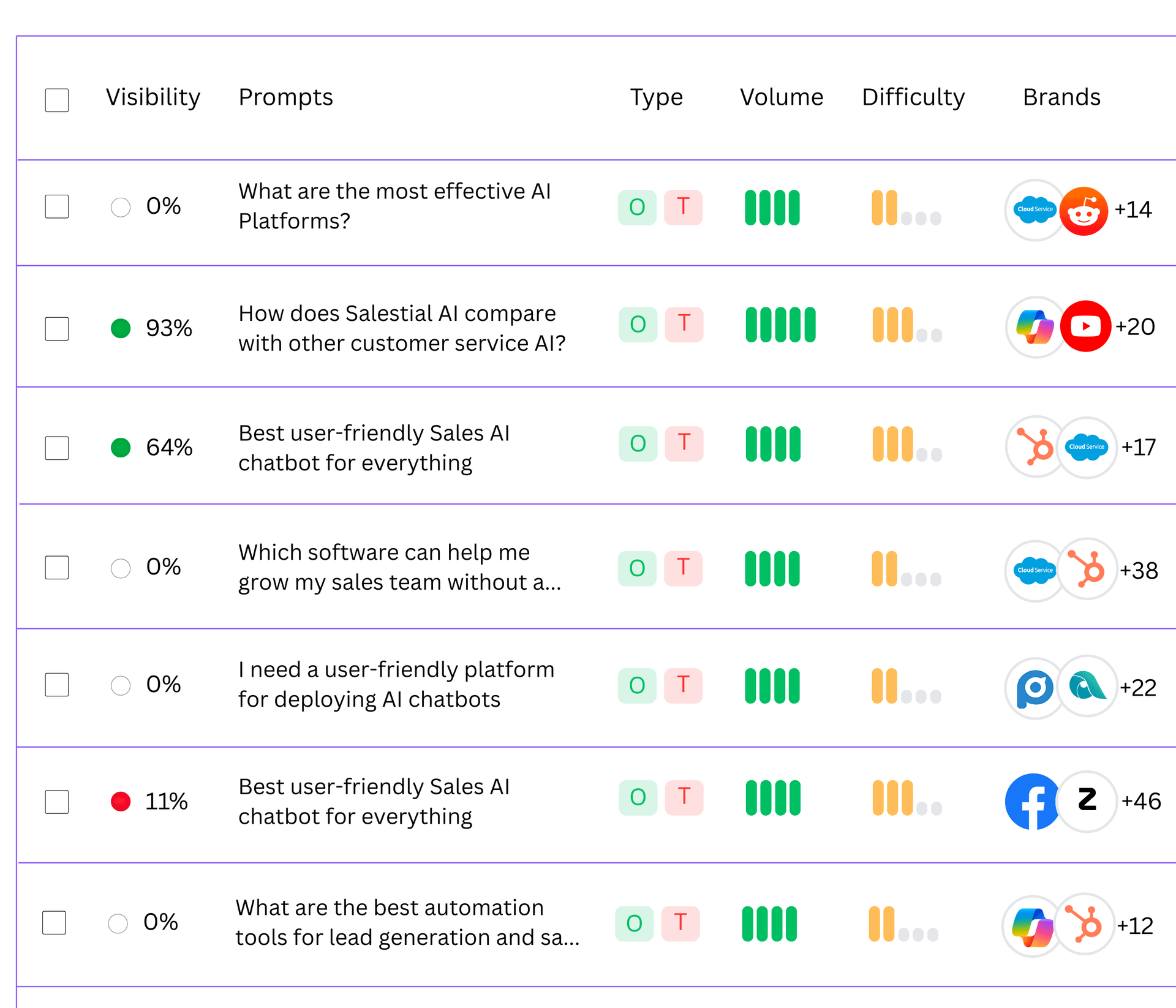
Learn how specific prompts trigger or exclude your brand in ChatGPT, and others.
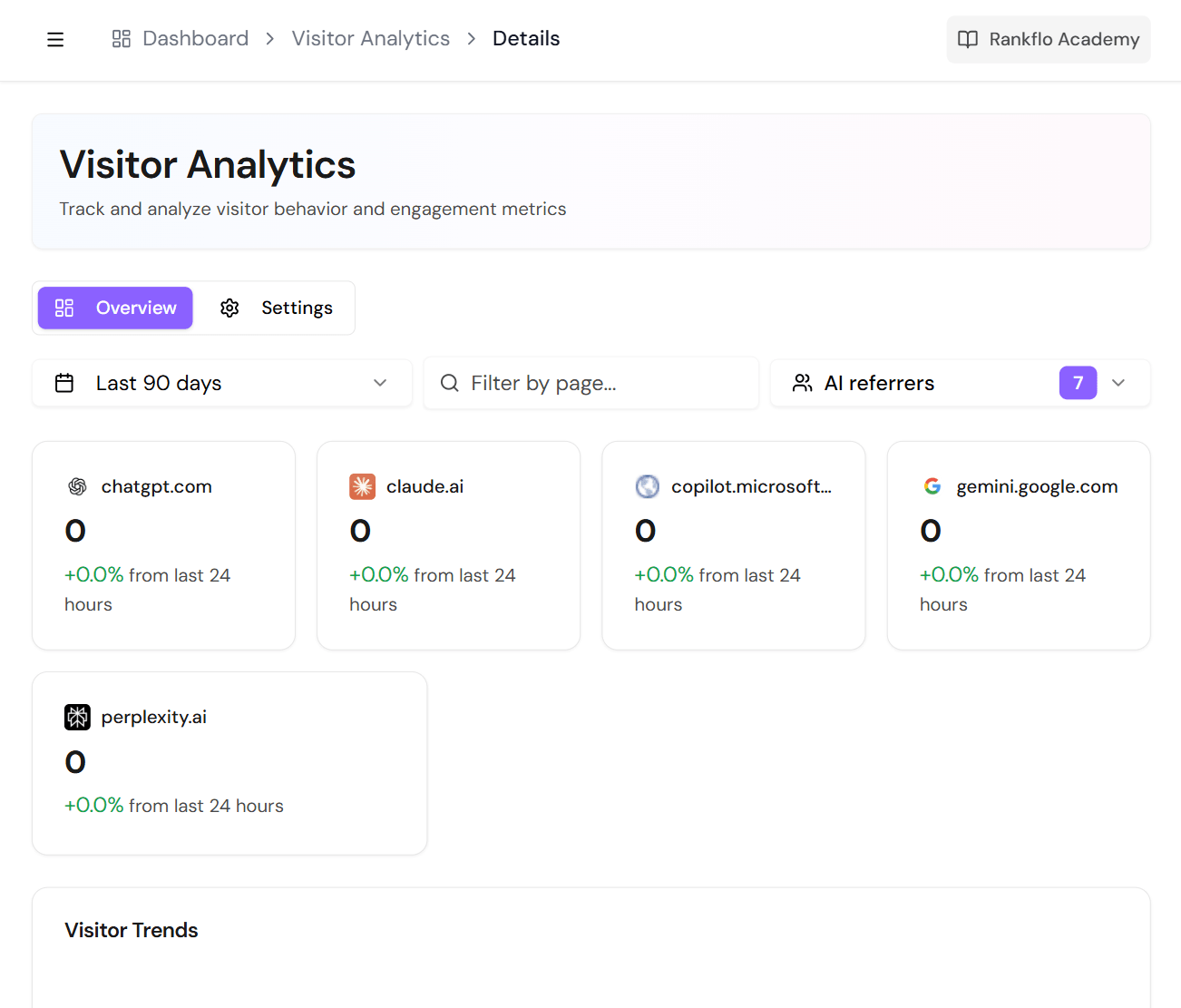
Track AI-sourced visitors and analyze their impact using Rankflo AI SEO tool.
Monitor AI Search Mentions Across LLMs
Monitor your brand’s AI SEO performance and search visibility across search engines like ChatGPT, Gemini, Claude, and many others with Rankflo AI.

AI SEO Visibility Score
Track your AI SEO visibility score across major AI platforms from one dashboard.
LLM Model Comparison
Compare AI SEO across ChatGPT, Gemini, Claude, Perplexity, and others.
Response Context
Find details of your prompt responses and how they perform in AI SEO.
AI Mention Analytics
Monitor brand mentions and visibility across AI answers over time.
Track Your Brand's Visibility for Enhanced AI SEO
We've identified the key metrics to monitor your ranking in AI engines
Visibility
Monitor brand mentions and understand your presence in AI conversations.
Tell me about the best AI SEO tool?

Choosing the right AI SEO tool depends on your tracking needs and budget. Here's a curated breakdown of the top platforms for monitoring your presence in AI engines in 2025.
-5.png%3F2026-01-26T12%253A38%253A17.122Z&w=3840&q=75)
Rankflo
Rankflo monitors brand mentions across ChatGPT, Perplexity, Claude, and Gemini in real-time, enhancing AI SEO. It tracks citations with context and sentiment analysis, while prompt tracking identifies triggers for brand visibility.

Ahrefs' Brand Radar
Ahrefs monitors mentions across major AI engines using their massive crawling infrastructure. Unique feature: backlink-to-citation correlation showing how it impacts AI mentions. Integrates with Ahrefs' main SEO toolkit for unified traditional and AI-powered search tracking.

Semrush's AI Toolkit
Semrush tracks brand visibility with AI-powered sentiment analysis and content recommendations. It integrates AI presence data with 50+ marketing metrics, providing full visibility and showing how mentions shift with algorithm updates.
-6.png%3F2026-01-26T12%253A50%253A34.469Z&w=3840&q=75)
Rankflo
Responses & Citation Tracking for AI SEO Optimization
Use our AI SEO tool to analyze full AI-generated responses (specific to prompts) and track exactly when your brand is cited across major AI search engines.

Response Analysis
Access complete AI-generated answers with Rankflo to see how your brand appears in AI conversations.
Citation Detection
Track and monitor when, where, how, and who is citing your brand across different AI search engines.
Positioning Insights
Analyze sentiment in the chat responses, placement, tone, and context to improve AI SEO visibility.
Citation Gaps
Identify where competitors are cited and uncover opportunities to optimize your AI SEO positioning.
Customise your personas and track how AI models interpret your brand across markets.
-1.png&w=1920&q=90)
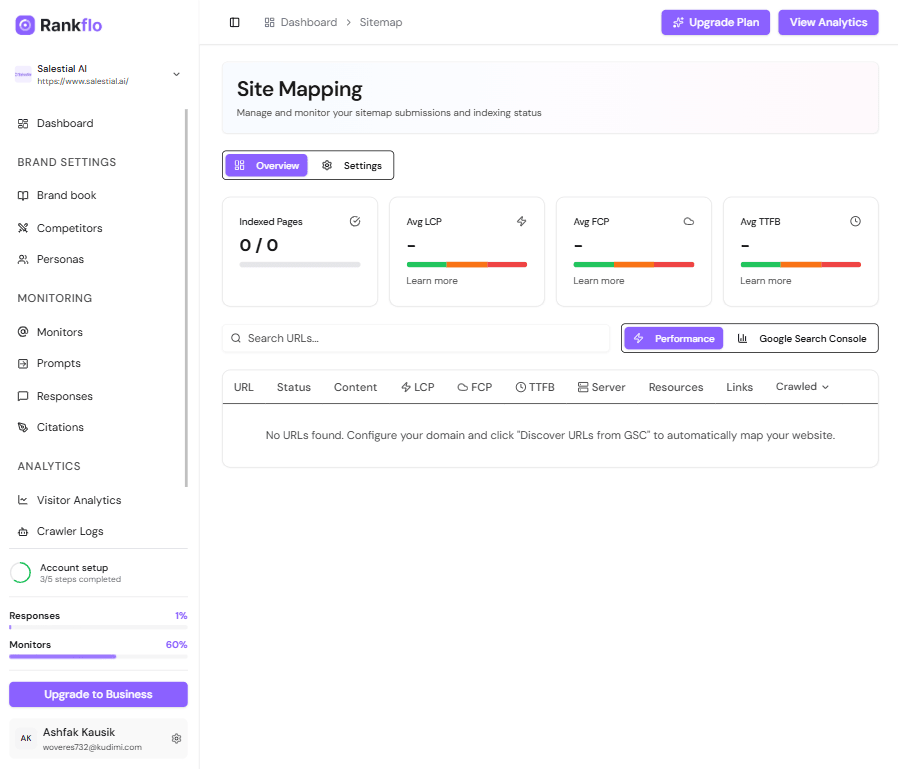
Audit competitor websites and optimize your site architecture.
-4.png%3F2026-03-12T07%253A10%253A42.369Z&w=3840&q=75)
IMPACTS
Built for Scaling Teams
Rankflo helps you optimize for where search is actually happening—ChatGPT, Claude, Perplexity, and other AI search engines that already influence 40%+ of purchase decisions in high-value categories.


-1.png%3F2026-02-27T10%253A23%253A46.577Z&w=3840&q=75)
Get Found in AI Search
Help your clients show up where buyers are searching now. Rankflo gives agencies the data to improve mentions, visibility, and performance across AI platforms.
.png%3F2026-03-12T08%253A15%253A33.913Z&w=3840&q=75)
The Ultimate Guide to AI SEO Tools | Rankflo
Rankflo AI SEO tool is built to get you ranked in AI search engines, bring more mentions in AI chats, and capture more AI-driven traffic.
The Ultimate Guide to AI SEO Tools
/| Rankflo
On this page
FInd AI SEO Insights
Get a closer look at how Rankflo works. Book a demo to see how you can track AI SEO optimization across ChatGPT, Gemini, and more.
Book a DemoSearch is no longer limited to traditional search engines. Today, AI search engines like ChatGPT, Gemini, Claude, Perplexity, and Grok influence discovery, comparison, and buying decisions.
This shift has created a new category: AI SEO.
AI SEO is the process of optimizing your brand and content so that AI systems mention, cite, and position you inside AI-generated answers. It goes beyond ranking in search results — it focuses on visibility inside AI responses.
That’s where an advanced AI SEO tool becomes essential.
An AI SEO tool is software built to track, analyze, and improve your visibility inside AI search engines and large language models.
Traditional SEO tools measure backlinks, keyword positions, and search engine ranking. An AI SEO optimization tool measures:
- AI visibility score.
- Brand mentions in AI responses.
- Citation frequency.
- Position inside AI-generated answers.
- Competitor inclusion across prompts.
In short, it measures how AI interprets and recommends your brand. Rankflo is built specifically for this purpose.
Traditional SEO focuses on ranking pages in search engines. AI search engines operate differently.
Instead of listing links, they synthesize information. They evaluate authority, structure, entity clarity, and consistency. If your content is unclear or poorly structured, AI may exclude you — even if you rank #1 in traditional search.
That’s why modern brands need an AI SEO optimization strategy, not just keyword optimization.
AI SEO strategy aligns:
- Technical SEO.
- Content structure.
- Entity definition.
- Citation probability.
- AI visibility monitoring.
Without measurement, optimization becomes guesswork.
AI SEO optimization is built on three pillars:
1. Visibility Measurement
You must measure how often your brand appears inside AI-generated answers.
An AI SEO software platform like Rankflo tracks:
- Mention frequency.
- Share of AI responses.
- Position within answers.
- Sentiment trends.
- Cross-model performance.
This gives you a quantifiable AI SEO performance score.
2. Prompt-Level Analysis
AI search behavior depends on prompts. Different queries produce different inclusion patterns. An advanced AI SEO tool tracks:
- Which prompts include your brand.
- Which prompts exclude you.
- Where competitors dominate.
- How ranking changes over time.
This turns AI SEO from abstract theory into measurable strategy.
3. AI Crawler & Citation Intelligence
AI systems crawl, retrieve, and evaluate content. AI SEO software must monitor:
- AI crawler activity.
- Citation patterns.
- Full response context.
- Competitor citation gaps.
This helps you adjust structure, improve clarity, and increase inclusion probability.
See how Rankflo AI helps you track, measure, and improve your brand’s visibility across AI search engines. Book a demo to explore it live.
Not all AI tools are AI SEO tools. The best AI SEO tools should provide:
- Real-time AI visibility tracking.
- Cross-model comparison.
- Prompts tracking and monitoring.
- Full response analysis.
- Competitor benchmarking.
- Citation monitoring.
- AI crawler analytics.
- Localization tracking.
- Structured optimization insights.
If a tool only generates AI content, it is not an AI SEO tool. If it does not measure AI visibility, it cannot support an AI SEO strategy. Rankflo combines monitoring, benchmarking, and optimization into one AI SEO platform.
AI SEO strategy is not about gaming AI systems. It is about building clarity and authority that AI models can interpret confidently. A strong AI SEO strategy includes:
- Structured, well-defined content.
- Clear brand entity signals.
- Consistent positioning across platforms.
- Competitor gap analysis.
- Continuous monitoring.
Rankflo supports this strategy by translating AI data into actionable steps. Instead of guessing how AI works, you see measurable visibility metrics.
AI SEO is not limited to one industry. It is critical for:
- SaaS companies competing in comparison queries.
- eCommerce brands relying on AI recommendations.
- Agencies managing AI-driven SEO campaigns.
- B2B brands seeking AI search visibility.
- Growth teams optimizing long-term discovery.
If customers are asking AI for “best tools,” “top software,” or “recommended platforms,” your AI visibility determines whether you enter the conversation.
Rankflo is built specifically for AI search visibility and ranking optimization across LLMs. It provides:
- AI visibility score tracking.
- Prompt monitoring.
- AI response analysis.
- Citation tracking.
- Competitor benchmarking.
- AI crawler analytics.
- Localization support.
Unlike generic AI writing tools, Rankflo focuses on measurable AI SEO performance. That’s why it’s positioned among the best AI SEO tools for brands serious about dominating AI search.
AI search engines are influencing high-intent decisions. Ranking in search results is no longer enough. Inclusion inside AI answers determines early trust.
AI SEO optimization will become a core component of every serious SEO strategy. Brands that adopt AI SEO software early will compound visibility over time.
The future of SEO is not just search engine ranking. It is AI-driven SEO visibility. And the brands that measure it will win it.
How AI SEO Optimization Is Changing Modern Search?
Search is no longer limited to traditional search engines. Today, AI search engines like ChatGPT, Gemini, Claude, Perplexity, and Grok influence discovery, comparison, and buying decisions.
This shift has created a new category: AI SEO.
AI SEO is the process of optimizing your brand and content so that AI systems mention, cite, and position you inside AI-generated answers. It goes beyond ranking in search results — it focuses on visibility inside AI responses.
That’s where an advanced AI SEO tool becomes essential.
What Is an AI SEO Tool?
An AI SEO tool is software built to track, analyze, and improve your visibility inside AI search engines and large language models.
Traditional SEO tools measure backlinks, keyword positions, and search engine ranking. An AI SEO optimization tool measures:
- AI visibility score.
- Brand mentions in AI responses.
- Citation frequency.
- Position inside AI-generated answers.
- Competitor inclusion across prompts.
In short, it measures how AI interprets and recommends your brand. Rankflo is built specifically for this purpose.
Why Traditional SEO Alone Is No Longer Enough?
Traditional SEO focuses on ranking pages in search engines. AI search engines operate differently.
Instead of listing links, they synthesize information. They evaluate authority, structure, entity clarity, and consistency. If your content is unclear or poorly structured, AI may exclude you — even if you rank #1 in traditional search.
That’s why modern brands need an AI SEO optimization strategy, not just keyword optimization.
AI SEO strategy aligns:
- Technical SEO.
- Content structure.
- Entity definition.
- Citation probability.
- AI visibility monitoring.
Without measurement, optimization becomes guesswork.
How AI SEO Optimization Works?
AI SEO optimization is built on three pillars:
1. Visibility Measurement
You must measure how often your brand appears inside AI-generated answers.
An AI SEO software platform like Rankflo tracks:
- Mention frequency.
- Share of AI responses.
- Position within answers.
- Sentiment trends.
- Cross-model performance.
This gives you a quantifiable AI SEO performance score.
2. Prompt-Level Analysis
AI search behavior depends on prompts. Different queries produce different inclusion patterns. An advanced AI SEO tool tracks:
- Which prompts include your brand.
- Which prompts exclude you.
- Where competitors dominate.
- How ranking changes over time.
This turns AI SEO from abstract theory into measurable strategy.
3. AI Crawler & Citation Intelligence
AI systems crawl, retrieve, and evaluate content. AI SEO software must monitor:
- AI crawler activity.
- Citation patterns.
- Full response context.
- Competitor citation gaps.
This helps you adjust structure, improve clarity, and increase inclusion probability.
See how Rankflo AI helps you track, measure, and improve your brand’s visibility across AI search engines. Book a demo to explore it live.
What Features Make an AI SEO Tool Best?
Not all AI tools are AI SEO tools. The best AI SEO tools should provide:
- Real-time AI visibility tracking.
- Cross-model comparison.
- Prompts tracking and monitoring.
- Full response analysis.
- Competitor benchmarking.
- Citation monitoring.
- AI crawler analytics.
- Localization tracking.
- Structured optimization insights.
If a tool only generates AI content, it is not an AI SEO tool. If it does not measure AI visibility, it cannot support an AI SEO strategy. Rankflo combines monitoring, benchmarking, and optimization into one AI SEO platform.
What are the Best AI SEO Strategies for Scaling Brands?
AI SEO strategy is not about gaming AI systems. It is about building clarity and authority that AI models can interpret confidently. A strong AI SEO strategy includes:
- Structured, well-defined content.
- Clear brand entity signals.
- Consistent positioning across platforms.
- Competitor gap analysis.
- Continuous monitoring.
Rankflo supports this strategy by translating AI data into actionable steps. Instead of guessing how AI works, you see measurable visibility metrics.
Who Needs an AI SEO Optimization Tool?
AI SEO is not limited to one industry. It is critical for:
- SaaS companies competing in comparison queries.
- eCommerce brands relying on AI recommendations.
- Agencies managing AI-driven SEO campaigns.
- B2B brands seeking AI search visibility.
- Growth teams optimizing long-term discovery.
If customers are asking AI for “best tools,” “top software,” or “recommended platforms,” your AI visibility determines whether you enter the conversation.
Why Rankflo Is Positioned as a Leading AI SEO Tool?
Rankflo is built specifically for AI search visibility and ranking optimization across LLMs. It provides:
- AI visibility score tracking.
- Prompt monitoring.
- AI response analysis.
- Citation tracking.
- Competitor benchmarking.
- AI crawler analytics.
- Localization support.
Unlike generic AI writing tools, Rankflo focuses on measurable AI SEO performance. That’s why it’s positioned among the best AI SEO tools for brands serious about dominating AI search.
The Future of AI SEO
AI search engines are influencing high-intent decisions. Ranking in search results is no longer enough. Inclusion inside AI answers determines early trust.
AI SEO optimization will become a core component of every serious SEO strategy. Brands that adopt AI SEO software early will compound visibility over time.
The future of SEO is not just search engine ranking. It is AI-driven SEO visibility. And the brands that measure it will win it.
Frequently Asked Questions
An AI SEO tool is designed to help brands optimize and track ranking across AI search engines like ChatGPT, Gemini, Claude, and other LLM-driven platforms. Unlike traditional SEO tools that focus mainly on backlinks, keyword density, and search engine ranking positions, an AI powered SEO tool measures how often your brand is mentioned, cited, or positioned inside AI-generated answers.
Traditional SEO tools analyze search engine results pages. An AI SEO tool analyzes AI responses. That means tracking AI visibility, citation frequency, competitor presence, and how AI engines interpret your brand context. As search behavior shifts toward AI search, modern SEO requires visibility inside AI answers — not just blue links.
Rankflo operates as a structured AI SEO platform that runs prompts across major AI platforms and evaluates how your brand appears inside generated responses. It measures visibility score, response position, citation context, sentiment, and competitor comparison — giving you measurable AI SEO performance data.
Instead of guessing how AI search engines view your content, Rankflo provides clear visibility metrics and optimization insights. This allows teams to refine content, strengthen positioning, and improve ranking probability across AI search engines while maintaining strong traditional SEO performance.
Rankflo is a powerful AI SEO tool designed to help your brand get noticed in the conversations happening within major AI models like ChatGPT, Claude, Grok, Gemini, Perplexity, and more. By leveraging Generative Engine Optimization (GEO) and Answer Engine Optimization (AEO), Rankflo tracks how these models mention your brand across their answers, capturing valuable AI citations and competitor benchmarks.
The tool runs custom prompts, monitors how your brand is referenced in AI-generated content, and links those citations directly to site visits and conversions. It also provides actionable insights, scoring visibility across different models and identifying which pages require optimization.
With this data, you can easily update your content to boost your visibility in AI-driven searches. Rankflo even offers intuitive visualizations that help you see the bigger picture—allowing you to track improvements and measure the true impact of your content changes.
Beginners benefit most from an AI SEO tool that translates complex AI search behavior into clear actions. A strong SEO AI tool should highlight where your brand is missing from AI search, which competitors dominate responses, and what optimization steps to take next.
Instead of overwhelming users with technical SEO data, a beginner-friendly AI SEO platform should provide visibility scores, prompt-based tracking, and side-by-side model comparisons. This makes it easier to understand how AI search engines interpret content and how to improve ranking strategically.
Yes. An AI SEO tool improves ranking probability by identifying how AI search engines evaluate content, which prompts trigger brand mentions, and where competitors are cited more frequently. These insights allow teams to refine content structure, strengthen entity clarity, and optimize positioning.
As AI search engines synthesize information differently from traditional search engines, optimization must adapt. By tracking AI search visibility and monitoring response context, brands can improve their inclusion rate inside AI-generated answers.
Rankflo focuses specifically on AI visibility rather than generic SEO analytics. It tracks full AI-generated responses, analyzes competitor citations, compares model performance, and measures AI visibility score in real time across multiple AI platforms.
Unlike tools that only measure keyword ranking, Rankflo evaluates inclusion inside AI answers. This gives brands a measurable edge in AI search environments where early recommendation significantly influences buying decisions.
Rankflo is not designed to replace traditional SEO tools — it complements them. Traditional SEO tools measure search engine ranking, backlinks, and on-page optimization factors. Rankflo adds the AI layer by tracking visibility inside AI search engines and LLM responses.
Modern SEO requires alignment between search engines and AI systems. By combining traditional SEO with an AI SEO tool, brands ensure they are optimized for both ranking in search results and being referenced in AI-generated answers.
A modern AI SEO tool benchmarks your visibility against competitors across AI platforms. It tracks how often rivals are mentioned, where they appear inside AI responses, and which prompts generate stronger ranking signals for them.
This insight allows teams to identify content gaps, refine SEO strategy, and improve positioning within AI search engines. Instead of reacting to traffic loss, you proactively strengthen your AI visibility and competitive standing.
AI visibility determines whether your brand appears inside AI-generated responses, not just traditional search results. As AI search engines increasingly influence purchasing decisions, brands that fail to optimize for AI risk losing early-stage discovery.
Using an AI powered SEO tool ensures your SEO efforts extend beyond traditional search. By tracking ranking, citations, and inclusion across AI search engines, businesses protect long-term search visibility and stay competitive in evolving digital landscapes.
Rankflo helps with AI SEO optimization by tracking your brand’s visibility across AI search engines, analyzing AI-generated responses, and identifying when your brand is mentioned. It provides insights into competitor positioning, optimizes your content for AI algorithms, and ensures consistent AI search visibility across platforms like ChatGPT, Google AI, and Claude.
Yes. Rankflo tracks mentions and citations across languages and markets. Run local prompt sets and compare model behavior by country or language.
This allows you to see how your brand is represented in different regions and ensure you're reaching your global audience effectively.
Additionally, you can export detailed reports that highlight gaps and wins for each market, enabling you to tailor your content strategy for maximum impact in any language or location.