The #1 Generative Engine Optimization (GEO) Tool
The Best GEO Tool to Get Your Brand
Ranked in 
Rankflo's GEO tool tracks your brand's visibility in AI responses and guides you to improve inclusion. Start your free trial.
Empowering The Leading Brands
To Maximize AI Search Brand Mentions With Rankflo AI GEO Tool


.png%3F2026-02-10T12%253A58%253A43.374Z&w=3840&q=75)
.png%3F2026-03-04T04%253A05%253A40.266Z&w=3840&q=75)
Monitor Visibility With Generative Engine Optimization Tool
Track your brand visibility in ChatGPT, Claude, Perplexity, Gemini, and Many others with the best generative engine optimization tool Rankflo AI.

GEO Visibility Score
Measure your visibility across leading generative engines in one dashboard.
Mention Analytics
Track brand mentions and visibility trends across AI generated answers with our GEO tool.
GEO Comparison
Compare performance across ChatGPT, Gemini, Claude, and other platforms.
Response Context
With Rankflo AI GEO tool, view full AI-generated responses mentioning your brand for better decisions.
Map and Track Your GEO Performance
Know which signals put your brand in AI responses and which ones keep you out.
Position
RankFlo calculates what percentage of AI responses include your brand across every prompt you track, giving you a clear GEO performance score.
What are the best generative engine optimization tools for tracking AI response visibility?

The right GEO tool depends on whether you need surface-level mention data or precise brand inclusion intelligence across multiple AI platforms.

Rankflo
RankFlo is a dedicated GEO tool built to track how ChatGPT, Claude, Perplexity, Gemini, Grok, and 14+ platforms respond about your brand in real time. It measures GEO visibility score, position, brand reference context, sentiment trends, and AI share of voice across every monitored prompt. Unlike generic AI SEO tools, RankFlo focuses specifically on brand inclusion and what drives your position inside AI responses.

Ahrefs' Brand Radar
Ahrefs monitors brand mentions through its large-scale crawling infrastructure and connects those signals with organic search metrics and backlink data. It does not track the specific position your brand holds inside AI responses or provide dedicated GEO guidance for improving brand inclusion.

Semrush's AI Toolkit
Semrush includes AI reporting as part of its broader SEO suite. Its data focuses on general search visibility rather than the precise signals that determine your brand's position and inclusion rate inside AI responses across ChatGPT and other platforms.

Rankflo
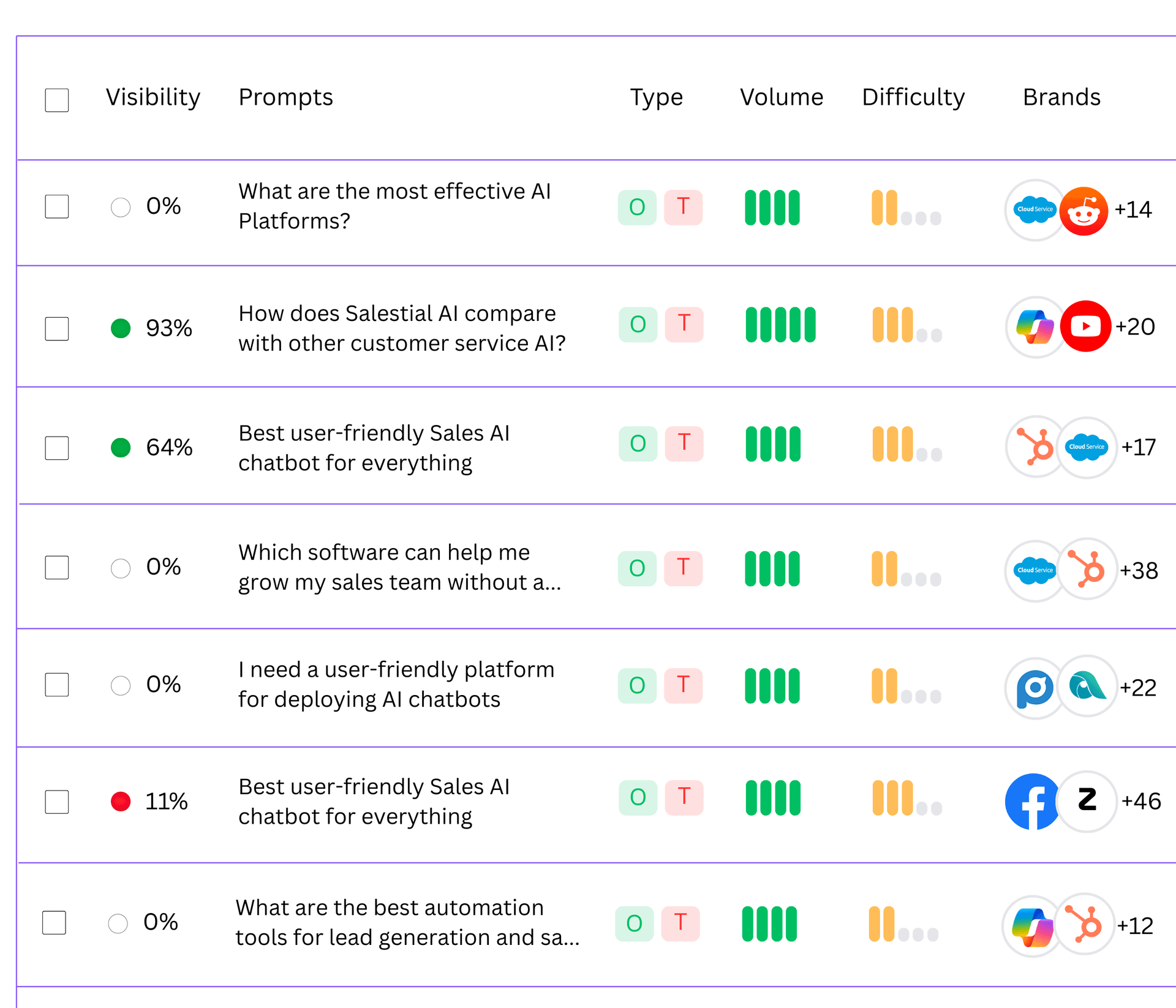
Understand which prompts trigger or exclude your brand across ChatGPT, Gemini, and others.
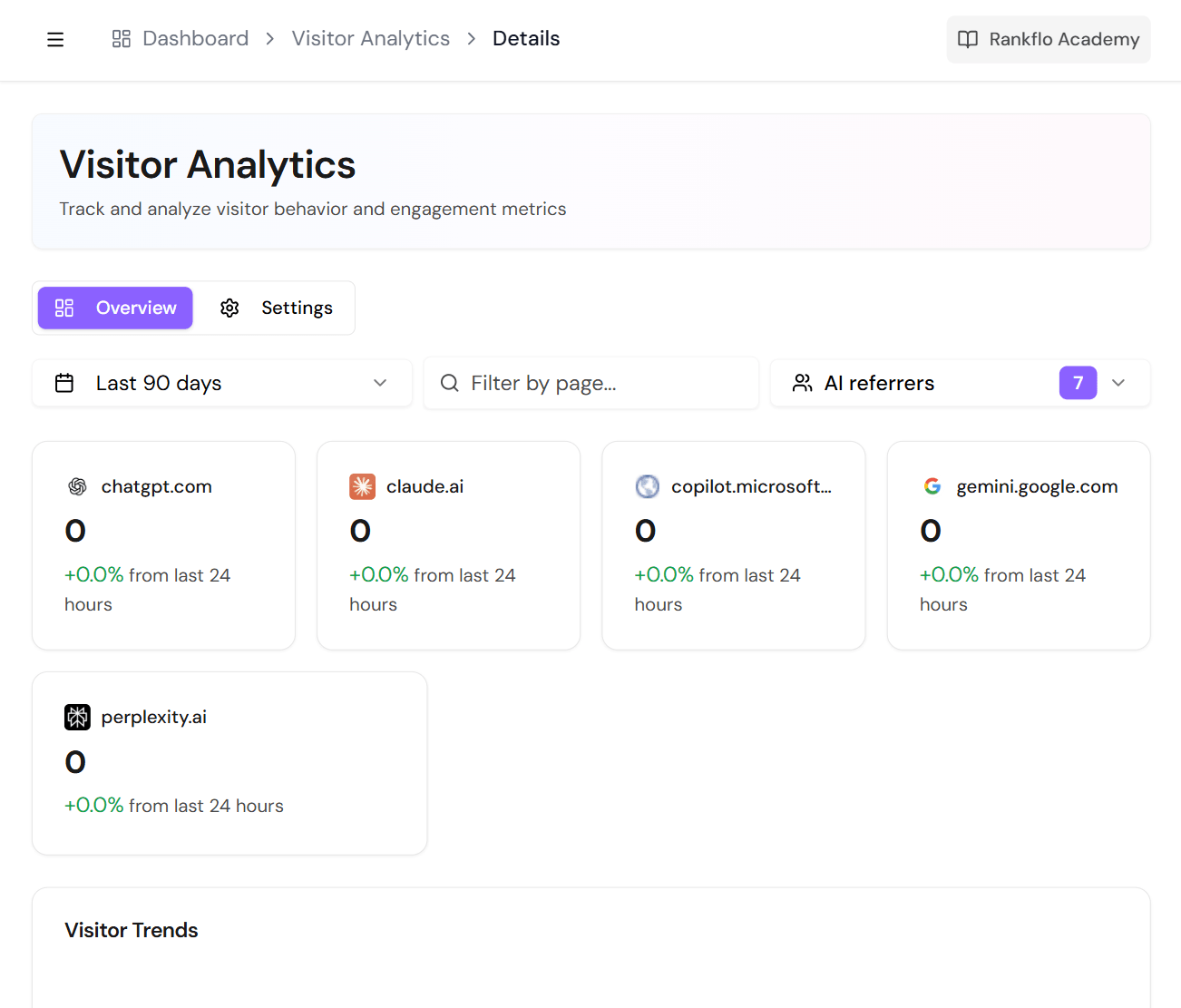
Track AI sourced visitors and measure their impact with Rankflo GEO tool.
Real-time GEO Analysis
Track your brand inclusion rate in real-time with position data from different AI Models.
Competitor Benchmarking With Generative Engine Optimization Tool
Analyze competitor visibility across generative engines- how they are ranking and uncover gaps affecting your brand presence.
SEO Benchmarking
Compare your AI SEO visibility score against competitors across major AI platforms.
Competitor Mentions
Track how often rivals are mentioned and how they rank inside AI-generated responses.
AI Visibility Share
Measure your share of AI search visibility versus competitors across monitored prompts.
Model Comparison
Analyze competitor performance across ChatGPT, Gemini, Claude, and other AI engines.
Real-Time GEO Analysis Across Multiple AI Platforms
Track your GEO performance with RankFlo and see your brand's inclusion rate and position in AI responses!
Track your visibility across languages and regions to improve generative search presence.
-2.png&w=1920&q=90)
Manage how generative engines interpret and position your brand across markets.
-3.png&w=1920&q=90)
Start Leveraging the #1 GEO Tool
Rankflo AI SEO software for businesses, enterprises, agencies, or an online business help you to rank your brand in AI models like ChatGPT, Claude, Gemini, Perplexity, and others. Stop being invisible to AI platforms. With our Rankflo AI generative engined tool, get more search visibility and start getting mentioned where your audience is searching daily.
-6.png%3F2026-03-25T06%253A12%253A36.246Z&w=3840&q=75)
The Ultimate Guide to Generative Engine Optimization Tool
Rankflo is the AI visibility platform built to show you how ChatGPT, Gemini, and Claude respond about your brand, measure your inclusion rate across 14+ platforms, and give you the content data to improve your position where buyers are already searching.
The Ultimate Guide to Generative Engine Optimization Tool
/Rankflo
On this page
Get Ranked by Rankflo AI
Book a demo and get your brand ranked in GEO search before your competitors do.
Book a DemoTraditional search puts your page in a list. The Generative Engine Optimization tool puts your brand in the synthesized answer.
A GEO tool ensures your brand appears in synthesized AI answers, like those from ChatGPT and Gemini, rather than being buried in organic search results. It’s about positioning your brand where buyers are already searching, not just in search engines, but directly in AI-driven platforms.
As AI search engines continue to grow, a GEO tool ensures that your brand doesn’t get left behind. Most buyers now turn to AI-driven responses for recommendations. Without inclusion in these answers, your brand misses the chance to be part of their decision-making process.
A GEO tool allows you to track your brand’s inclusion, measure your position, and understand how your content can be optimized to get noticed by these powerful platforms.
Start using Rankflo AI generative engine optimization tool to get more brand mentions and be ranked in ChatGPT, Claude, Gemini, Perplexity, and others.
While traditional SEO focuses on ranking your pages in search engine results, a GEO tool tracks your brand’s presence in AI-generated answers. AI platforms like ChatGPT, Claude, and Gemini use synthesized responses, and GEO ensures your brand is included and positioned effectively.
GEO focuses on brand inclusion and content positioning, whereas traditional SEO tools focus on backlinks, technical SEO, and keyword placement.
Rankflo’s GEO tool measures real-time brand inclusion across 14+ AI platforms. It tracks your brand’s visibility, position, and share of voice in synthesized answers.
You’ll get data on:
- Your brand’s inclusion rate in AI responses.
- The exact position of your brand in the AI-generated answers.
- Changes in your AI share of voice across multiple platforms.
Rankflo provides you with a complete GEO score, allowing you to monitor and optimize your performance consistently.
Not all tools designed for AI visibility are GEO tools. The best Generative Engine Optimization tools should provide real-time, actionable insights. They should track brand inclusion in synthesized answers, provide full access to AI responses, and allow you to make strategic adjustments.
The key capabilities of the best GEO tools include:
- Real-time AI search monitoring across multiple platforms.
- Precise tracking of brand inclusion in synthesized AI responses.
- Access to full AI-generated answers for optimization.
- Competitor AI share of voice benchmarking.
- Actionable recommendations based on GEO data.
A strong GEO strategy isn’t just about making your brand visible in AI responses. It’s about optimizing your content to meet the criteria these platforms use to determine which brands are included in answers.
Define Your Brand Entity
Your brand needs a clear and well-defined identity that AI models can recognize. A strong brand entity makes it easier for platforms like ChatGPT and Gemini to include you in responses.
Create Structured Content for AI Models
Content needs to be organized in a way that AI platforms can understand and use. This means structured data, clean formatting, and content that directly answers the questions being asked by buyers.
Consistent Brand Positioning
Position your brand consistently across all platforms, ensuring your entity is referenced in a way that makes it authoritative and trustworthy.
Monitor AI Search Visibility
Continuous monitoring of your brand’s performance on AI platforms is crucial. Real-time data helps you stay on top of trends and adjust your strategy accordingly.
Optimize Content Based on GEO Data
As you receive GEO data from Rankflo, use it to refine your content strategy. The goal is to improve your brand’s visibility in AI-generated responses by adjusting your content and website structure.
As AI search engines become the primary source for decision-making, brands across industries need a GEO tool to stay competitive. If your buyers are researching through AI platforms like ChatGPT or Claude, your brand’s inclusion rate is critical to revenue.
Here are some industries that should invest in a GEO tool:
- SaaS brands needing AI search visibility.
- eCommerce brands seeking inclusion in AI answers.
- B2B companies competing for brand mentions in AI recommendations.
- Agencies managing multiple GEO strategies across clients.
If you’re not tracking your brand’s AI search visibility, you’re missing out on a critical area of buyer engagement.
Rankflo is the leading GEO tool built to measure and improve your brand’s performance across AI platforms. Unlike other tools that focus on general search data, Rankflo specializes in providing detailed insights into your brand's presence in AI-generated responses.
With Rankflo, you’ll get:
- Real-time AI search monitoring.
- Brand inclusion tracking across multiple platforms.
- Detailed AI visibility data and actionable recommendations.
- Competitor benchmarking.
- Real synthesized answer access.
Rankflo was built from the ground up to optimize your AI visibility, helping you stay ahead of the competition and grow your brand through effective Generative Engine Optimization.
What Is Generative Engine Optimization tool?
Traditional search puts your page in a list. The Generative Engine Optimization tool puts your brand in the synthesized answer.
A GEO tool ensures your brand appears in synthesized AI answers, like those from ChatGPT and Gemini, rather than being buried in organic search results. It’s about positioning your brand where buyers are already searching, not just in search engines, but directly in AI-driven platforms.
Why the GEO Tool Matters for Your Brand?
As AI search engines continue to grow, a GEO tool ensures that your brand doesn’t get left behind. Most buyers now turn to AI-driven responses for recommendations. Without inclusion in these answers, your brand misses the chance to be part of their decision-making process.
A GEO tool allows you to track your brand’s inclusion, measure your position, and understand how your content can be optimized to get noticed by these powerful platforms.
Start using Rankflo AI generative engine optimization tool to get more brand mentions and be ranked in ChatGPT, Claude, Gemini, Perplexity, and others.
How the GEO Tool Works Differently from Traditional SEO?
While traditional SEO focuses on ranking your pages in search engine results, a GEO tool tracks your brand’s presence in AI-generated answers. AI platforms like ChatGPT, Claude, and Gemini use synthesized responses, and GEO ensures your brand is included and positioned effectively.
GEO focuses on brand inclusion and content positioning, whereas traditional SEO tools focus on backlinks, technical SEO, and keyword placement.
How Rankflo’s GEO Tool Tracks and Measures AI Performance?
Rankflo’s GEO tool measures real-time brand inclusion across 14+ AI platforms. It tracks your brand’s visibility, position, and share of voice in synthesized answers.
You’ll get data on:
- Your brand’s inclusion rate in AI responses.
- The exact position of your brand in the AI-generated answers.
- Changes in your AI share of voice across multiple platforms.
Rankflo provides you with a complete GEO score, allowing you to monitor and optimize your performance consistently.
What the Best Generative Engine Optimization Tools Should Do?
Not all tools designed for AI visibility are GEO tools. The best Generative Engine Optimization tools should provide real-time, actionable insights. They should track brand inclusion in synthesized answers, provide full access to AI responses, and allow you to make strategic adjustments.
The key capabilities of the best GEO tools include:
- Real-time AI search monitoring across multiple platforms.
- Precise tracking of brand inclusion in synthesized AI responses.
- Access to full AI-generated answers for optimization.
- Competitor AI share of voice benchmarking.
- Actionable recommendations based on GEO data.
Building a GEO Strategy That Works
A strong GEO strategy isn’t just about making your brand visible in AI responses. It’s about optimizing your content to meet the criteria these platforms use to determine which brands are included in answers.
Define Your Brand Entity
Your brand needs a clear and well-defined identity that AI models can recognize. A strong brand entity makes it easier for platforms like ChatGPT and Gemini to include you in responses.
Create Structured Content for AI Models
Content needs to be organized in a way that AI platforms can understand and use. This means structured data, clean formatting, and content that directly answers the questions being asked by buyers.
Consistent Brand Positioning
Position your brand consistently across all platforms, ensuring your entity is referenced in a way that makes it authoritative and trustworthy.
Monitor AI Search Visibility
Continuous monitoring of your brand’s performance on AI platforms is crucial. Real-time data helps you stay on top of trends and adjust your strategy accordingly.
Optimize Content Based on GEO Data
As you receive GEO data from Rankflo, use it to refine your content strategy. The goal is to improve your brand’s visibility in AI-generated responses by adjusting your content and website structure.
Who Needs a GEO Tool Right Now?
As AI search engines become the primary source for decision-making, brands across industries need a GEO tool to stay competitive. If your buyers are researching through AI platforms like ChatGPT or Claude, your brand’s inclusion rate is critical to revenue.
Here are some industries that should invest in a GEO tool:
- SaaS brands needing AI search visibility.
- eCommerce brands seeking inclusion in AI answers.
- B2B companies competing for brand mentions in AI recommendations.
- Agencies managing multiple GEO strategies across clients.
If you’re not tracking your brand’s AI search visibility, you’re missing out on a critical area of buyer engagement.
Why Rankflo Is the Best GEO Tool for Growing Brands?
Rankflo is the leading GEO tool built to measure and improve your brand’s performance across AI platforms. Unlike other tools that focus on general search data, Rankflo specializes in providing detailed insights into your brand's presence in AI-generated responses.
With Rankflo, you’ll get:
- Real-time AI search monitoring.
- Brand inclusion tracking across multiple platforms.
- Detailed AI visibility data and actionable recommendations.
- Competitor benchmarking.
- Real synthesized answer access.
Rankflo was built from the ground up to optimize your AI visibility, helping you stay ahead of the competition and grow your brand through effective Generative Engine Optimization.
Frequently Asked Questions
Generative engine optimization, or GEO, is the practice of structuring your brand's content and authority signals so that AI platforms consistently include and reference your brand in their synthesized answers. Unlike traditional SEO tools, which focus on ranking pages in search results, GEO focuses on your brand inclusion rate and position inside AI responses when buyers ask questions in your category.
A GEO tool is a platform that tracks how ChatGPT, Gemini, and Claude respond about your brand, measures your brand inclusion rate and position inside those synthesized answers, and gives you the content data to improve your GEO performance over time. RankFlo is built specifically as a GEO tool covering 14+ platforms including ChatGPT, Claude, Perplexity, Gemini, and Grok.
The best generative engine optimization tools give you real brand inclusion data across multiple AI platforms, prompt-level position tracking, full synthesized answer access, brand reference source mapping, and competitor AI share of voice benchmarking. Tools track many things — make sure yours tracks your actual position inside AI responses. RankFlo covers 14+ platforms. Start a free trial to see your GEO performance data within 24 hours.
Rankflo is the best GEO tool for brands competing in categories where buyers ask ChatGPT and Gemini for recommendations. It tracks your GEO score, brand inclusion rate, synthesized answer position, and competitor AI share of voice across multiple platforms simultaneously. Unlike broader AI SEO tools, RankFlo was built specifically for GEO from the ground up.
Rankflo runs structured prompts across actual AI platform interfaces and records how ChatGPT, Gemini, and Claude respond about your brand. It tracks your brand inclusion rate, position inside synthesized answers, reference sources, sentiment signals, and competitor AI share of voice across 14+ platforms simultaneously. Instead of guessing your GEO performance, you see measurable brand inclusion data you can act on directly.
GEO focuses broadly on how AI platforms synthesize and generate responses that reference your brand across all types of queries. The best answer engine optimization, or AEO strategy, focuses more specifically on answer engines like ChatGPT where a buyer asks for a direct recommendation and the AI names specific brands. Rankflo supports both through its cross-platform position tracking and brand reference intelligence.